Stem by Stem: Building a Winter Wardrobe from the Florist's Palette
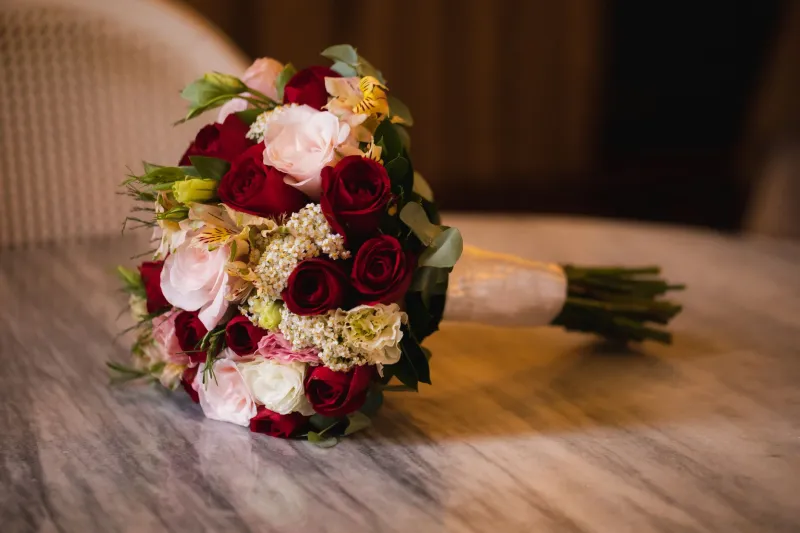
There is a moment, usually around the third week of November, when the florist's bucket stops being a summer leftover and becomes something altogether more interesting. The dahlias are gone. In their place: fat amaryllis stems, bunches of paperwhites, berry-heavy branches, eucalyptus in that dusty grey-green, and evergreens with a faint frost still on them. It looks like a colour palette someone has already done the hard work on.
Which is exactly what it is. If you have ever stood in front of your wardrobe on a grey Tuesday and felt the familiar fog of not knowing where to start, a winter bouquet is a genuinely useful prompt. Not because you should dress like a flower arrangement — please, no — but because it hands you a set of colours and textures that already work together. British weather does the rest.
Read the bucket before you read the rail
The trick is to look at the bouquet as a whole before you start pulling out individual stems. What is the dominant colour? What is the accent? What is doing the quiet work in the background? Florists build with a hierarchy, and so should you. A bucket of amaryllis, paperwhites and eucalyptus is not three separate ideas. It is one red, one white, one grey-green, plus whatever texture the greenery brings.
Once you have that hierarchy in your head, your own wardrobe becomes easier to shop from. You are not looking for a new everything. You are looking for one or two pieces that echo the bucket, then letting your existing coats, knits and tights do the supporting roles. This is the opposite of costume dressing. It is just colour coordination with better references.
Amaryllis red: use it like a full stop
Amaryllis is the loudest thing in most winter buckets, and that is precisely why it should be the smallest thing in your outfit. A whole red coat in late November can tip into seasonal-decoration territory, especially against wet pavements and fairy lights. But a red glove, a thin red knit scarf, a red leather bag strap or a pair of deep red tights under a dark skirt? That reads as deliberate rather than themed.
Think of amaryllis red as punctuation. One mark per outfit is usually enough. If you are wearing a charcoal wool coat and a cream jumper, a single red accent gives the whole thing a pulse. Two red accents starts to feel like a Christmas jumper without the reindeer. Three and you are a carol singer. Choose your moment.
The other option is to go deeper. Amaryllis is not a tomato red; it has a slight blue undertone, which makes it easier to wear than you might think. A burgundy-red knit, a wine-coloured corduroy skirt, a pair of raspberry-red boots — these all nod to the flower without shouting about it. They also handle a British December better than a bright pillar-box red, which can look stark under grey skies.
Paperwhite whites: soft, not surgical
Paperwhites are the quietest stem in the bucket and the easiest to get wrong. Bright white next to a winter face can look clinical, especially in flat daylight. The trick is to look for the creamier end of white — the colour of the petal rather than the centre — and to mix it with texture. A creamy Aran knit, an off-white corduroy jacket, a bone-coloured scarf with a bit of slub in the weave: these all read as paperwhite rather than dentist's chair.
White also works as a buffer. If you have bought a red knit and are not sure how to wear it without feeling like a bauble, put it next to cream. The same goes for berry tones and dark greens. A white or cream base layer makes the stronger colours feel intentional rather than accidental. In practical terms: cream jumper, dark jeans, red scarf, done.
Berry stems: the in-between colour
Berry stems — those deep purples, plums and near-blacks on the branch — are the underrated part of the bucket. They sit between red and blue, which means they flatter almost everyone and work with almost everything. A plum knit under a grey coat is one of the most useful outfits in a British winter wardrobe. It is warm without being loud, and it looks good in the sort of light that never quite gets bright.
If you are nervous about colour, start here. Berry tones are forgiving. A deep purple pair of gloves, a blackberry-coloured crossbody bag, a plum wool scarf — these are the sort of pieces you will reach for again and again between now and February. They also photograph well against wet pavements and stone buildings, which is a small but real pleasure in this country.
Eucalyptus grey: the texture workhorse
Eucalyptus is not really a colour. It is a texture with a colour attached. That grey-green, slightly dusty finish is what stops a winter bouquet from looking like a box of Quality Street, and it does the same for an outfit. If your winter wardrobe is all solid colour and smooth fabric, eucalyptus is your reminder to add something with a bit of nap, bloom or slub.
Think brushed wool, soft cord, a chunky knit with a halo, a scarf with a bit of fuzz. A eucalyptus-grey coat is one of the best purchases a British winter dresser can make, because it works with red, plum, cream, navy and black without arguing with any of them. It also hides a multitude of damp bus-stop moments.
Frosted evergreens: the grounding note
Every bucket needs something dark and steady at the base, and in winter that is the evergreens. In wardrobe terms, this is your deepest green, your navy, your charcoal. These are not accent colours; they are the thing the accents sit against. A dark green wool coat, a forest-coloured knit, a pair of deep green tights under a navy dress — all of these give the amaryllis reds and paperwhite creams somewhere to land.
A word on tights, because this is Britain and tights matter. If you are building an outfit around a winter palette, the tights are not an afterthought. Deep green opaques under a cream knit dress, or a berry-toned pair under a grey skirt, pull the whole thing together in a way that black tights sometimes cannot. They also add a bit of warmth, which is the real point.
Putting it together without the costume drama
The safest way to use a florist's palette is to follow the same rule as the bucket: one dominant, one accent, one grounding tone, one texture. That is it. A charcoal coat, a plum knit, a cream scarf and a red glove is a complete outfit that reads as considered rather than fancy-dress.
The second rule is to keep the finishes modern. Winter florals can go twee very quickly if you pair them with ruffles, velvet ribbons and sparkly everything. Instead, let the colours do the work and keep the shapes simple. Straight-leg trousers, a clean wool coat, a crew-neck knit, a plain leather bag. The palette is the personality; the clothes can be quiet.
And the third rule, which is really the British rule: dress for the weather you actually have. A florist's bucket does not care about drizzle, but your outfit should. Waterproof boots, a coat that can take a shower, a bag that wipes clean. The prettiest palette in the world is no good if you are miserable by the time you reach the bus stop.
So next time you pass a florist and see the buckets out on the pavement, stop for a second. Look at what is in them. You are not shopping for flowers. You are reading next month's wardrobe, one stem at a time.