Mud on the Knees, Petals on the Sleeve: Dressing for a Wet November Allotment
Photo: Vincent van Gogh, Public domain, via Wikimedia Commons
By the second week of November, the allotment has stopped pretending. The last dahlias are brown at the edges, the path is a ribbon of puddles, and the clay — that heavy, sticky British clay — clings to boots like it has a personal grievance. It is not, in other words, the obvious setting for a floral wardrobe. But if you dress botanically most days, you do not want to swap your whole personality at the shed door. You want a version of it that can survive a compost heap.
That is the brief for this allotment afternoon: practical enough for digging, weeding and hauling wet leaves, but still recognisably you. The trick is not to wear your best Liberty print and hope for the best. It is to build a mud-proof layer cake, with the florals placed where they can be seen and, more importantly, cleaned.
Start with fabrics that can take a beating
November clay is not fussy. It will find the hem of a silk skirt, the cuff of a pale knit, the one suede boot you thought you could sacrifice. So begin with fabrics that are already on the side of the gardener: dense cotton canvas, needlecord, wool blends, washable merino, and waxed cotton. These are the materials that shrug off a brush-down and a cold wash.
Avoid anything that needs dry cleaning, anything with a trailing sleeve, and anything that turns transparent when wet. Viscose is a trap. Unwashed vintage silk is a beautiful trap. A giant mohair cardigan is a lovely idea for a pub lunch and a terrible one for a compost heap.
Dark grounds are your friend. A floral print on navy, forest green, aubergine or black will hide splashes far better than cream. It also feels right for the season: think hellebore, winter jasmine, dried seed heads, rather than blowsy summer roses.
Dungarees with a dark botanical bent
The workhorse of the allotment wardrobe is a pair of dungarees. In November, look for cotton canvas or needlecord, with a relaxed leg that can cope with thick socks and a thermal underneath. Dark floral dungarees are not as common as plain ones, but they do exist, and they are worth searching out. Keep the print small and dense; a huge cabbage rose will look like fancy dress once it has a mud stripe across the knee.
If you already own a summer pair, you can stretch them into autumn with a long-sleeved thermal and a thin knit. But be honest about the fabric. Lightweight cotton will soak through at the knee the moment you kneel on wet ground. A dedicated pair, or a pair you are willing to relegate to the plot, is the kinder choice.
Pockets matter. So do adjustable straps and a leg that can be rolled or tucked into boots. A slightly cropped length is easier to keep out of the mud than a trailing wide leg.
Knits you can actually wash
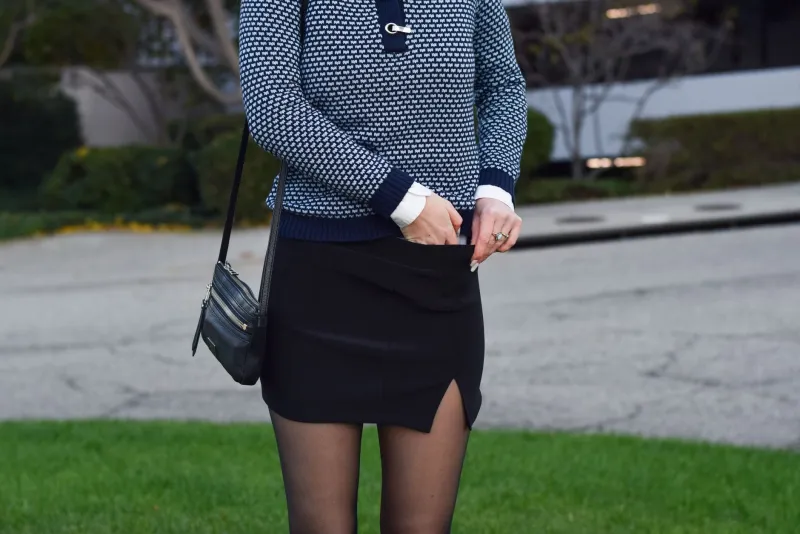
A good allotment knit is not the same as a good sofa knit. It needs to be washable, dense enough to block a chill, and thin enough to layer under dungarees without turning you into a scarecrow. Cotton-rich knits and washable merino are the sensible options. A dark floral jumper or a Fair Isle with botanical motifs will do the same job as a print, with less risk of looking precious.
Wear it over a base layer, not instead of one. November wind gets into every gap. A thermal vest, a long-sleeved tee, then the knit, then the dungarees, then the waxed layer. You will feel bulky for the first ten minutes and grateful for the rest of the afternoon.
The waxed layer and the boot question
A waxed jacket is the closest thing the British garden has to armour. Look for a mid-thigh length with a decent hood, roomy pockets and a hem that does not flap into wet soil. This is not the place for a fashion trench. It is the place for something that can be sponged down and re-waxed.
Boots should be sturdy and genuinely waterproof. Neoprene-lined wellies are brilliant for standing in puddles; leather work boots with wool socks are better for digging and walking to the pub. Whichever you choose, test them before the allotment, not halfway down a muddy path. A boot that rubs is a boot that ruins the afternoon.
Small floral signals that survive mud
You do not need a floral jacket to keep your identity visible. In fact, the smaller signals often work better. A dark floral scarf tucked inside the waxed collar, a printed handkerchief in the pocket, floral socks just visible above the boot, an enamel pin on the jacket lapel. These are the details that survive a brush-down and still say something about you.
Keep the precious stuff at home. A pale leather bag, a silk headscarf trailing in the wind, a long necklace that catches on brambles — all lovely, none useful. A waxed canvas tool bag and a thermos are the accessories of the day.
The pub transition
The pub is the reward, and you do not need a full outfit change to be allowed in. The trick is to keep a small clean-up kit in the car or shed: a stiff brush, a packet of wet wipes, a spare pair of shoes, and a clean jumper in a bag. Knock the worst of the clay off your boots, wipe down the trousers, swap the wellies for trainers, and take off the outer layer. Roll your sleeves and bring the floral scarf back out.
If you have been kneeling in compost, a change of socks is not a luxury. Nor is a quick wash of hands and face. A dab of hand cream and a spritz of something woody will make you feel less like a garden bed and more like a person ordering a Sunday roast.
After the plot: a cleaning routine that works
Do not leave the mud to dry overnight. Knock clods off outside, then brush the fabric while it is still slightly damp. Waxed jackets get a sponge and cold water, never detergent. Dungarees and knits go on a cold, gentle wash, inside out, with the print protected. Boots dry naturally, away from radiators. Stuff newspaper in leather boots if they are soaked.
Keep an allotment kit separate from your everyday wardrobe: old gloves, a brush, a spare bag, a clean jumper. It makes the whole ritual easier, and it means your favourite floral pieces are not sacrificed to the cause.
A short checklist for a November 2026 plot day
- Dark floral dungarees or a work shirt in dense cotton
- Washable knit, plus thermal base layer
- Waxed jacket with a hood
- Sturdy wellies or leather boots, wool socks
- Small floral scarf, printed socks or enamel pin
- Gloves, brush, wet wipes, spare shoes
- Thermos and a clean jumper for the pub
The allotment does not ask you to abandon your floral wardrobe. It asks you to edit it. Choose the prints that can take a knock, put them where they can be seen, and keep the precious things for another day. Then go and stand in the pub with clay on your boots and a flower at your throat, which is a very British kind of pretty.