One Small Stem, One Big Coat: A Winter Brooch Guide for British Weather
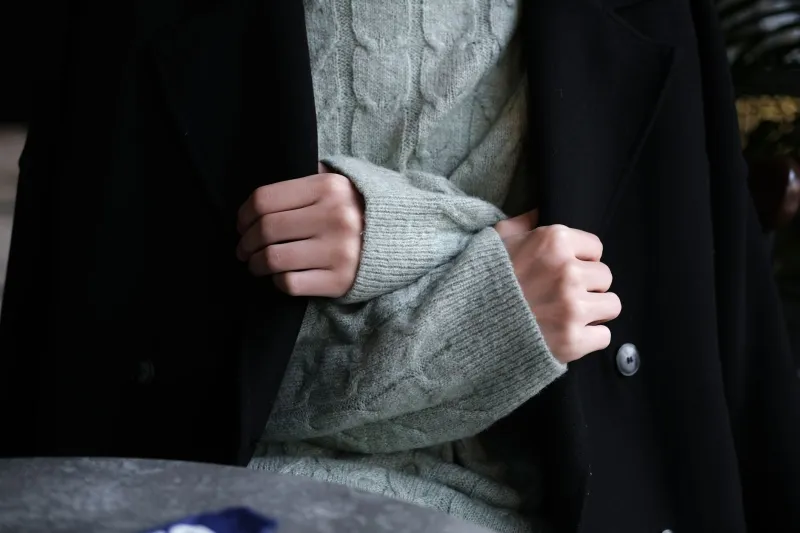
There is a point in November when the coat becomes the outfit. You are buttoned up, scarf wound twice, and the only real chance to say something personal is the bit between collar and hem. A small botanical brooch does that job neatly. It is quicker than changing your bag, cheaper than a new knit, and far less committal than a full floral print. The trick is keeping it on the right side of charming — a single stem on a good wool coat, not a walking craft stall.
Start with scale, not sparkle
A winter brooch has to hold its own against thick wool, but it should not look like it has landed from another outfit. Heavy coats — tweed, duffle, a proper navy wool — can carry a slightly chunkier enamel flower or a resin-pressed petal piece. Finer knits and lightweight scarves need something smaller and flatter, or the pin will drag the fabric and pull a hole before lunch.
Think tonal before contrast. A muted rose enamel on a camel coat, a deep evergreen on grey, a brass stem on brown herringbone: these look collected rather than costumed. If your coat is already patterned, keep the brooch plain metal or a single dark flower. If the coat is plain, you can afford one vintage enamel bloom with a bit of colour. The aim is a small accent that looks as if it has always been there, not a souvenir from a school fete.
Where to put it — and where not to
The lapel is the obvious spot, and it still works, but it can read a little formal on a casual weekend coat. Try high on the chest, just below the collarbone, or off-centre on a big scarf. On a roomy wool coat, pinning near the shoulder seam gives balance without shouting. On a scarf, pin through both layers but secure the brooch to the coat fabric underneath as well, so the scarf does not sag or pull. On a jumper, keep it at the neckline or on the shoulder, and avoid the button band of a cardigan — that is where pins go to die.
Do not pin through waterproof shells, coated jackets or anything with a taped seam. The hole will not heal, and the coating will let water in. Near the face is flattering because it draws the eye upwards, but keep the metal warm — brass, gold tone, aged silver — rather than bright chrome if you want it to feel soft. And resist the urge to cluster three flowers unless you are deliberately doing vintage market styling. One good stem is usually enough.
The weatherproofing bit
British winter is not kind to delicate jewellery. Enamel can chip, resin-pressed petals can cloud, and metal can spot after a wet walk. The simplest rule is to remove the brooch before heavy rain. If you are caught in a shower, dry it with a soft cloth and leave it at room temperature — not on a radiator, which can warp resin and dull enamel.
Store pins in a small tin with a silica sachet, and check the clasp every few wears. Locking pin backs, or the little rubber stoppers sold with good brooches, are worth swapping in for fiddly roll clasps. For delicate vintage pieces, a tiny piece of clear tape on the inside of the coat where the pin sits can stop wool fibres pulling through. Rotate the placement slightly rather than stabbing the same hole every day. And keep perfume away from resin petals; alcohol will make them sticky over time.
Charity-shop trays and high-street finds
Charity shops are the best source of vintage enamel flowers, but you have to look properly. The good pieces are often in the jewellery tray behind the counter rather than on the open rack, so ask. Car boot sales, church halls and local antique fairs are also worth a Saturday morning. Check the pin stem for rust, open and close the clasp a few times, and look for smooth enamel edges rather than lumpy resin that has been badly moulded.
On the high street, Oliver Bonas, Accessorize, Monsoon and Marks & Spencer usually have a small selection of botanical pins in the autumn and winter. Independent garden centres and museum shops are quietly good for simple metal stems and leaf shapes. Etsy UK has a wide range of resin-pressed petal brooches if you want something specific, but read the reviews for clasp quality. Expect to pay £3–£25 in charity shops and £12–£40 on the high street. A £4 enamel violet with a secure back is a better buy than a £20 multi-pack that looks like a craft stall clearance.
How to avoid the craft-stall look
One brooch. One focal point. Matte finishes over high shine. A single flower head or one clean stem rather than a bouquet. If you are wearing a floral scarf, choose a plain metal pin; if you are wearing a textured knit, choose smooth enamel. Keep the rest of your accessories quiet — no floral bag, floral shoes and floral brooch all at once. The brooch should feel like a small, useful finish: a five-second addition that makes a grey coat look considered. That is the whole point of botanical dressing in a British winter. It is not about looking like a flowerbed. It is about one small, well-placed bloom that earns its keep.