Just One Flower: Why Restraint Wins in British Everyday Dressing
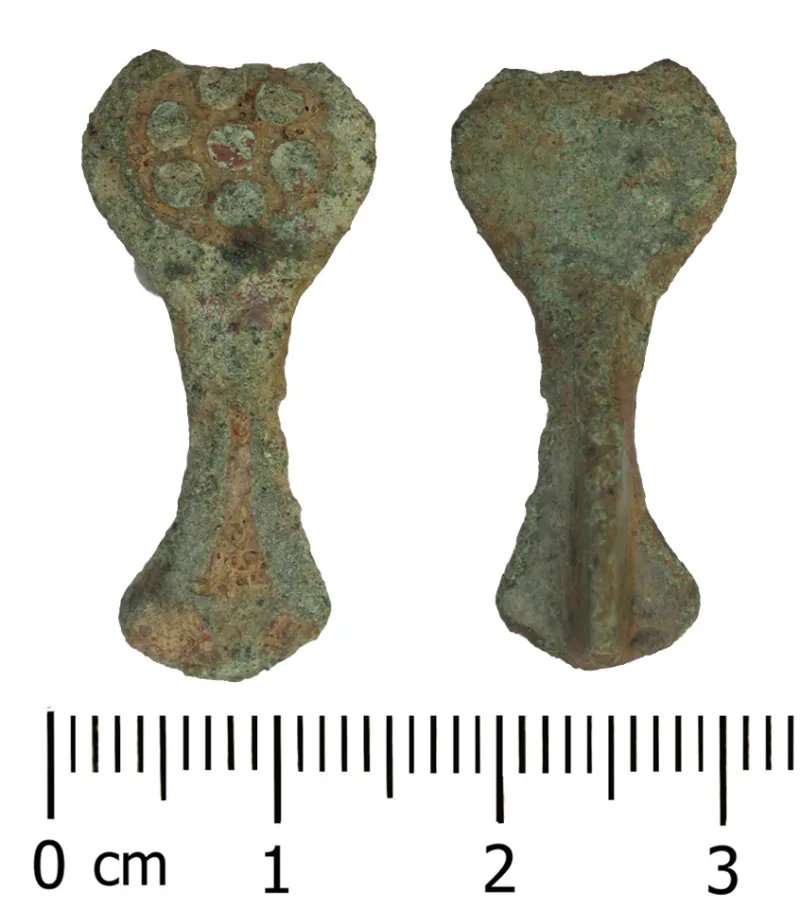
Photo: The Portable Antiquities Scheme, Charlotte Burrill, 2014-02-20 15:21:49, CC BY-SA 2.0, via Wikimedia Commons
There is a moment, usually just before you leave the house, when a coat seems to ask for something. Not a full floralscape. Not a bouquet. Just one flower, placed with intent. That is the quiet premise behind the single-bloom approach to British everyday style: one considered botanical accessory doing the work of an entire arrangement.
At Ohh Fleur we are not anti-floral. Far from it. But there is a difference between wearing a garden and wearing a gesture. A solitary flower brooch, a one-stem hair clip or a scarf with a single restrained botanical motif can feel more versatile, more modern and frankly more useful on a grey Tuesday in November than a dress covered in competing blooms.
The case for the solitary bloom
A full bouquet print is lovely in theory. In practice, it can announce itself before you do. It asks the rest of your outfit to step back, and it can make a simple morning feel like a styling puzzle. A single bloom does something different. It waits to be noticed. It gives the eye one place to land, then lets the rest of you get on with the day.
That is the 'Ohh' factor, really: not volume, but precision. One camellia pin on a charcoal coat. One small rose clip holding back a fringe. One silk scarf with a lone stem running through the border. These are not shy choices. They are confident ones, because they trust a single detail to carry the look.
Why British weather rewards restraint
British weather is not a backdrop. It is a participant. It adds wind, drizzle, sudden sunshine and the need for layers that come off and go back on again. A head-to-toe floral outfit has to work hard in all that. A single botanical accessory simply moves with you.
A brooch can sit on a coat lapel, then move to a knit when you get indoors. A one-stem hair clip works with a sleek ponytail and with a hood-adjacent rainy-day bun. A small floral scarf can be tied at the neck, looped through a bag strap or folded into the neckline of a plain jumper. The point is not that one accessory is magic. It is that one accessory is flexible.
There is also the practical matter of rain. A full floral skirt can look wonderful until it is plastered to your legs on the walk from the station. A single bloom near the face or on the shoulder keeps the botanical message visible even when your waterproof coat has taken over the silhouette.
Office-friendly botanicals
Most UK offices are not fashion shows. They are radiator-adjacent rooms with dress codes that range from 'smart casual' to 'please just wear something with a collar'. A single floral accessory fits that world neatly. It adds personality without becoming a conversation piece you have to manage all day.
Think of a small flower brooch on a blazer, maybe in brushed metal or felt rather than something fragile. Consider a slim hair clip with one fabric bloom, worn with a low bun. A fine scarf with a sparse botanical print can lift a plain navy dress without turning it into a summer outfit. The rule is simple: choose one bloom, keep it close to the face or on a structured edge, and let your tailoring do the rest.
If your office is very formal, a single stem print on a scarf is probably the easiest entry point. If it is creative-casual, a one-stem hair clip or a small pin on a denim jacket works beautifully. Avoid anything oversized or heavily jewelled for daytime. The bloom should look like a considered detail, not a corsage.
Weekend, off-duty and the art of one good thing
Weekend dressing is where the single bloom really earns its keep. A plain knit, straight-leg jeans and trainers can feel a bit flat by Saturday afternoon. Add one floral scarf, one small brooch on a canvas bag, or one stem clip in an otherwise simple hairstyle, and the outfit has a point of view.
This is especially useful in late autumn, when our wardrobes are full of useful things: wool coats, dark denim, boots, thick tights. A single botanical detail stops all that practicality from feeling purely functional. It is the difference between getting dressed and getting dressed with a small, private smile.
Choosing your focal flower
Start with scale. A single bloom should be readable but not theatrical. A brooch roughly the size of a fifty-pence piece is a good starting point for daytime; a hair clip can be slightly larger because it sits in movement. For scarves, look for a motif that repeats sparsely rather than a dense all-over print.
Next, think about colour. The bloom should either echo something already in your outfit or provide one clean contrast. A burgundy flower on a grey coat feels wintry and rich. A pale cream bloom on a navy jacket feels crisp. A dark green stem on a camel knit feels quietly botanical without shouting.
Texture matters too. Felt and wool flowers suit coats and knits. Metal and enamel pins suit tailoring. Silk and chiffon work best in hair or at the neck. And placement is everything: near the face lifts the whole look, on a lapel draws the eye upward, on a bag keeps things casual.
Dodging the wallpaper effect
The wallpaper effect happens when every element is competing. A floral dress, a floral scarf, a floral bag and a floral hair clip do not add up to more personality. They add up to visual noise. The easiest way to avoid it is to follow a simple rule: one botanical moment per outfit.
If you are wearing a floral print, let that be the bloom. Pair it with a plain knit, a solid coat and simple accessories. If you are wearing a plain outfit, add one floral accessory and stop there. One print, one texture, one small shine is usually plenty. Negative space is what makes a single flower look deliberate rather than accidental.
If in doubt, remove one botanical thing before you leave the house. The outfit will almost always look better for it.
A quieter signature
The single-bloom approach is not about being minimal for the sake of it. It is about choosing one thing well and letting it do its job. In a British everyday wardrobe full of weather-proof layers and practical shoes, a lone flower is a small act of prettiness. It does not need a whole bouquet behind it. One bloom, placed with care, is often enough.